EngineRestore
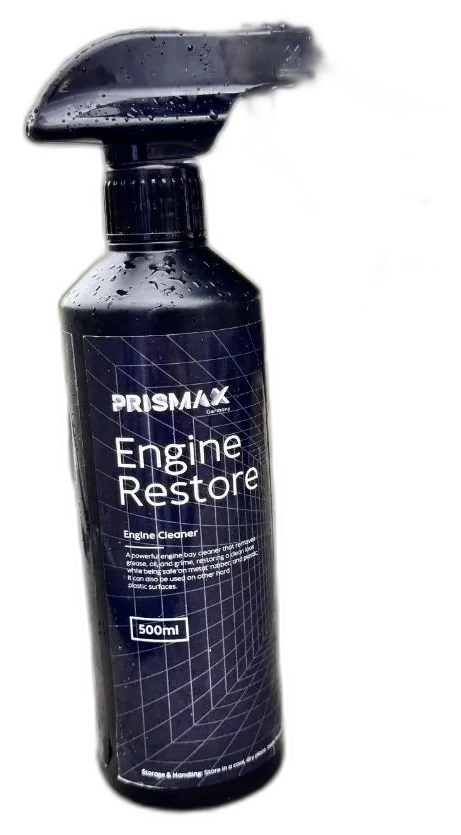
Engineered benefits
Cuts oil and grime
Dissolves leaked oil, dust crust and road film from covers, hoses and seams.
Material-safe
Formulated for metal, rubber and plastics, no chalking, no perished hoses.
Clean, even finish
Leaves the bay uniformly clean rather than blotchy and half-stripped.
Spray-and-rinse simple
Trigger application, short dwell, gentle rinse, no brushes required for light soiling.
Beyond the bay
Works on door shuts, hinges and other greasy hard parts too.
Resale-day weapon
A clean engine bay reads as a cared-for car the moment the bonnet opens.
Application protocol
Cool and cover
Work on a cool engine. Cover the alternator, exposed filters and any open electronics.
Spray evenly
Mist over the soiled areas, heavier on oily patches, lighter on painted surfaces.
Dwell and agitate
Let it work up to five minutes; agitate crusted spots with a firm detail brush.
Rinse gently
Rinse with low-pressure water, avoiding covered components, and let it air dry.
Technical data
Field questions
Cover sensitive components first, alternator, open air filters, exposed connectors, then spray freely on the rest and rinse with low pressure.
Cold or barely warm. A hot engine flashes the cleaner before it can work and can stress plastics during the rinse.
No, a garden hose on gentle flow is safer in the bay. The chemistry does the lifting.
Optional: once dry, a trim dressing on plastics gives the uniform dark factory look.
Two to three times a year keeps grime from baking in and makes each clean easier.